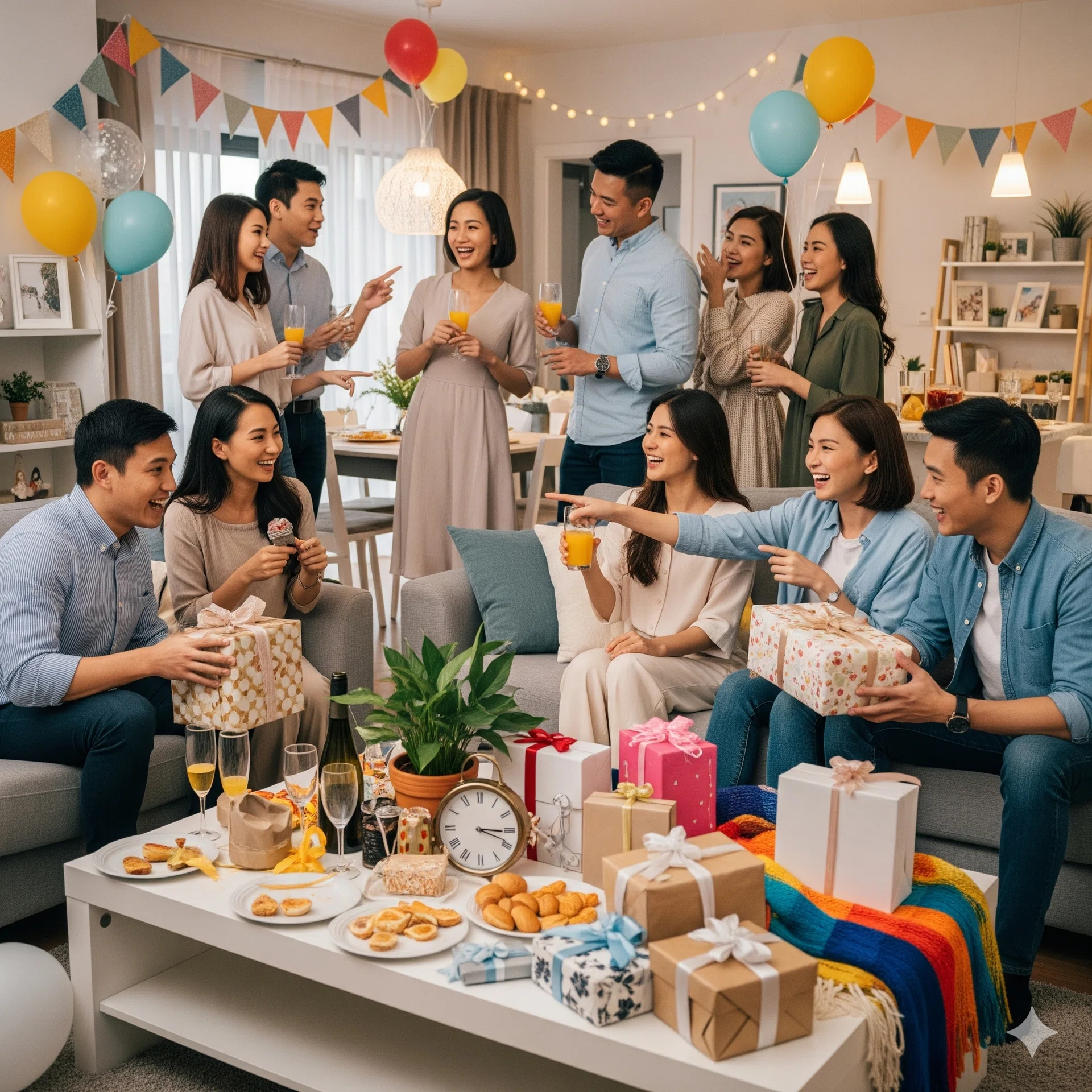
Moving into a new home is one of life’s quiet milestones. It doesn’t come with the spectacle of a wedding or the structured traditions of Chinese New Year, yet in Singapore it still carries its own social rituals. When friends or relatives invite you to their housewarming, one question almost always comes up.
Do you bring an ang bao?
And if you do, another thought quickly follows: does the type of home matter? Should the amount differ if the host has moved into a condominium rather than an HDB flat?
It’s a surprisingly common dilemma. Singapore’s housing landscape is unique, and with that uniqueness comes subtle etiquette questions. The short answer is that housewarming ang bao practices are flexible, informal, and shaped more by relationships than by property type.
Still, there are a few cultural nuances worth understanding.
Why Housewarmings Exist in the First Place
Housewarming celebrations have long existed across cultures. Traditionally, they were gatherings where friends and family visited a newly occupied home to offer blessings and good wishes for the household.
In many parts of Asia, the idea is closely tied to prosperity and harmony. Moving into a new space marks the beginning of a new chapter. Guests come not just to see the home but to symbolically “warm” it with positive energy, laughter, and community.
In Singapore, housewarmings usually take the form of casual gatherings. Some hosts organize simple meals or buffets. Others host open-house style visits where guests drop by throughout the day.
The atmosphere tends to be relaxed, somewhere between a dinner party and a celebration. Because of that casual tone, housewarming etiquette is much looser than wedding customs.
Is Ang Bao Expected at Housewarmings?
Unlike weddings, ang bao is not strictly expected at housewarming parties in Singapore.
Many guests simply bring a small gift instead. Others arrive empty-handed but bring their appetite and good company. Both approaches are widely accepted.
That said, giving ang bao has become increasingly common, particularly among close friends and family members. The red packet functions as a symbolic gesture of prosperity for the new home.
In Chinese culture, red envelopes represent blessings for luck, wealth, and happiness. Offering one when someone moves into a new house is seen as wishing them financial stability and good fortune in their new space.
Still, it remains optional rather than obligatory.
Condo vs HDB: Does It Actually Affect Ang Bao Amounts?
This is where many people start overthinking the situation.
Singapore’s housing system often leads people to assume that etiquette should differ depending on whether the new home is an HDB flat or a condominium. Condos are typically more expensive, and some guests wonder if the ang bao amount should reflect that.
In practice, the type of property almost never determines the ang bao amount.
Housewarming ang bao is not tied to property value. It’s tied to goodwill.
Unlike weddings, where ang bao sometimes corresponds to banquet costs, housewarmings have no financial formula attached to them. The host is not paying for your seat in a restaurant or hotel ballroom.
Because of that, the etiquette remains largely the same regardless of whether the home is an HDB flat, executive apartment, or condominium.
Why People Assume Condo Housewarmings Require More
Even though etiquette doesn’t formally change, people still feel social pressure in certain situations.
When visiting a large condominium unit or a newly renovated luxury home, guests sometimes feel that a slightly more generous ang bao might be appropriate. This feeling usually comes from perception rather than tradition.
Singapore society is highly aware of housing differences. Condominiums often signal a different price range and lifestyle compared to public housing. That awareness can subtly influence how guests interpret social expectations.
But culturally speaking, housewarming ang bao was never designed to reflect property price.
The gesture remains symbolic.
The Real Factor That Determines Ang Bao Amount
If there is one thing that truly affects ang bao amounts at housewarmings, it’s your relationship with the host.
Close friends and family members tend to give more generous envelopes simply because they share a stronger bond. Casual acquaintances may bring small gifts or skip ang bao entirely.
This pattern appears across all types of homes.
Whether the new house is an HDB flat in Tampines or a condominium in River Valley, the deciding factor is still the relationship between guest and host.
Typical Ang Bao Amounts for Housewarming Visits
Since housewarming ang bao isn’t tied to strict etiquette rules, the amounts tend to be modest.
Many guests choose auspicious numbers that symbolize luck or prosperity. In Chinese culture, certain numbers carry positive meanings associated with wealth and success.
Common housewarming ang bao amounts include:
- $28, symbolizing prosperity and growth
- $50, a simple and generous gesture
- $88, representing double fortune and good luck
- $100, a round number often given by close friends or relatives
These amounts are meant to express well wishes rather than to cover any cost.
When Guests Prefer Bringing Gifts Instead
Some people feel that housewarming gifts are more appropriate than ang bao.
This approach is especially common among younger Singaporeans, who often prefer practical or decorative items for the home.
Popular housewarming gifts include kitchen tools, scented candles, plants, tableware, or decorative items that match the host’s style. Practical items like wine glasses or coffee mugs are also common.
Gifts can feel more personal than cash, especially when they reflect the host’s tastes or lifestyle.
However, gifts also come with one small risk: duplicates. Many hosts receive multiple sets of similar items during housewarming gatherings.
This is one reason ang bao has become more popular in recent years. Cash allows homeowners to decide how they want to use the gift.
Cultural Beliefs Around New Homes
In Chinese culture, moving into a new house carries symbolic meaning beyond the physical space itself.
Homes are associated with stability, family harmony, and prosperity. Because of that, guests often bring items believed to attract good fortune.
Some people bring oranges or pineapples, both of which symbolize wealth in Chinese dialects. Pineapples are especially popular because the Hokkien phrase for pineapple sounds like “prosperity arriving.”
Others bring food items, desserts, or drinks that can be shared during the gathering.
These traditions coexist comfortably with ang bao giving, which is simply another way of offering blessings for the home.
When Ang Bao Is More Common
While housewarming ang bao is optional, there are certain situations where it appears more frequently.
One example is when the host is a close relative who has just purchased their first home. Buying property in Singapore is a significant milestone, and family members often celebrate it enthusiastically.
Another situation involves newly married couples who have just moved into their first home together. Guests sometimes combine housewarming blessings with wedding congratulations.
In these scenarios, ang bao feels more natural.
What Hosts Actually Expect
Interestingly, most hosts don’t expect ang bao at all.
Housewarming parties are usually organized to share a happy moment with friends and family. People want to show off the new space, introduce guests to the neighborhood, and celebrate the milestone of moving in.
Guests sometimes worry about etiquette more than hosts do.
In reality, many homeowners feel awkward receiving envelopes during what they intended to be a casual gathering.
A sincere “congratulations on your new home” often matters more than any monetary gift.
Modern Housewarming Etiquette in Singapore
As Singapore’s social culture evolves, housewarming etiquette has become more relaxed.
Younger homeowners often prioritize experience over tradition. They may organize informal gatherings with pizza, potluck meals, or casual drinks instead of formal hosting.
Some couples explicitly tell guests not to bring anything at all.
Others enjoy receiving gifts or ang bao but don’t attach expectations to them. The overall tone has shifted toward flexibility and comfort rather than strict social rules.
A Simple Guide to Housewarming Etiquette
If you’re invited to a housewarming and unsure what to do, the easiest approach is to keep things simple.
You can bring a small housewarming gift if you want something personal.
You can give a modest ang bao if you prefer a symbolic blessing.
Or you can simply attend, enjoy the gathering, and congratulate the host.
Any of these options would be considered polite in Singapore.
The Real Meaning Behind the Gesture
At the heart of housewarming traditions lies something very simple.
Moving into a new home represents a fresh start. It may be the result of years of saving, planning, or hard work. Inviting people into that space is a way of sharing the moment.
Guests who attend the celebration become part of the home’s earliest memories.
Whether you bring ang bao, a small gift, or just good conversation, the gesture carries the same meaning. You’re wishing the host happiness, comfort, and prosperity in the place they now call home.
Final Thoughts
So does housewarming ang bao etiquette differ between condos and HDB flats?
The answer is: not really.
Despite the assumptions people sometimes make, the type of property rarely determines how much you should give. Housewarming ang bao in Singapore is guided far more by relationships than by real estate values.
If you choose to give one, keep it symbolic and sincere. If you prefer bringing a small gift instead, that’s equally appropriate.
And if you simply show up ready to celebrate your friend’s new home, that’s already more than enough.