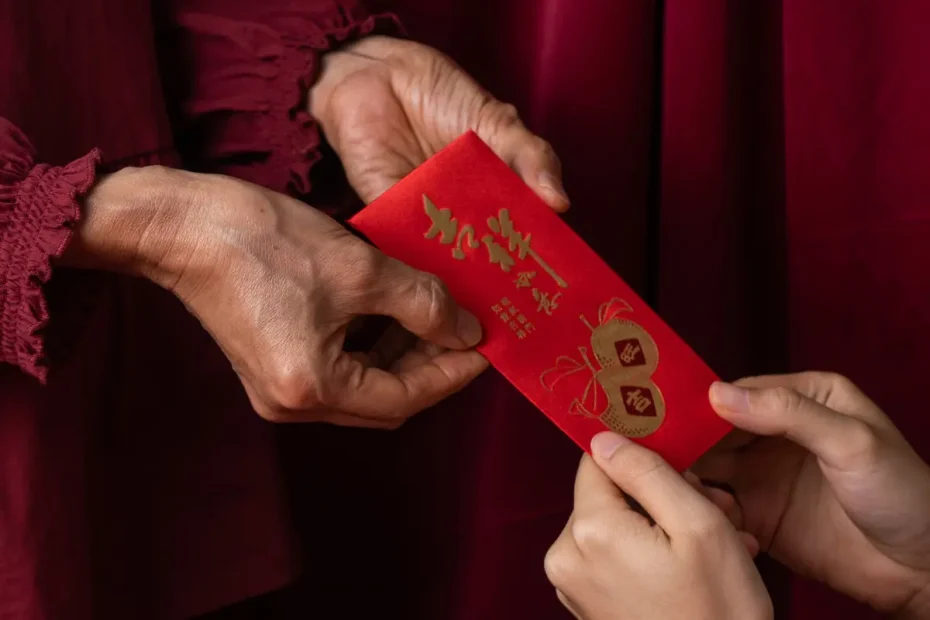
If there’s one thing Singaporeans tend to agree on about weddings, it’s that ang bao isn’t just about the venue. It’s also about the relationship.
You can attend two weddings at the exact same hotel, sit through identical menus, and still give completely different amounts. Not because the cost changed, but because your connection to the couple did.
And yet, this is where many people hesitate.
Should I give more because we’re close? Is it okay to give less if we’re not? What happens if I’m somewhere in between?
These questions come up often, especially when the relationship isn’t clearly defined. A colleague who became a friend. A friend you haven’t seen in years. A distant acquaintance who invited you out of courtesy.
In Singapore, wedding ang bao does follow certain patterns, but it isn’t rigid. Once you understand how relationship fits into the equation, the decision becomes far more intuitive, and far less stressful.
Why Relationship Matters in Ang Bao Giving
The idea of “covering your seat” is often used as a baseline in Singapore weddings. It gives people a rough starting point, especially for hotel banquets where costs are relatively predictable.
But that’s only one part of the picture.
Ang bao isn’t purely transactional. It’s also relational. It reflects how close you are to the couple, how involved you’ve been in their lives, and how you personally value the invitation.
This is why two guests at the same table can give very different amounts without anyone questioning it. The numbers are shaped by context, not just cost.
Starting With the Baseline
Before adjusting for relationship, most people begin with a general range based on the venue.
For a mid-tier hotel dinner, that might mean around $200 to $250 per person. For a higher-end venue, it could be closer to $280 or more. Lunch weddings usually sit slightly lower.
This baseline gives you a reference point. It answers the practical side of the question.
From there, relationship begins to influence the final amount.
Close Friends: When It Feels Personal
When the couple are close friends, ang bao naturally takes on a different meaning.
You’re not just attending because you were invited. You’re there because you’ve been part of their lives. You’ve seen the relationship develop, maybe even met them as a couple early on. The wedding feels like a shared milestone.
In these situations, many people give slightly above the baseline.
If the typical range for the venue is $220, you might give $250 or $268. The increase isn’t dramatic, but it signals something more personal.
Some close friends also consider other factors. Did you attend pre-wedding events? Were you part of the bridal party? Did the couple go out of their way for your own milestones?
All of these subtly shape how people approach ang bao.
That said, giving more doesn’t mean stretching beyond your comfort. The gesture is meant to reflect closeness, not create pressure.
Colleagues: The Middle Ground
Colleague weddings are where things tend to feel less clear.
Work relationships vary widely. Some colleagues are close friends in everything but name. Others are people you interact with occasionally, but not outside the office.
For colleagues, most people stick close to the baseline.
If the typical ang bao is $200, giving within that range feels appropriate. There’s usually no expectation to go significantly higher, unless the relationship has moved beyond work.
This is also where context matters.
If the invitation feels more formal, perhaps extended to a broader group within the company, the ang bao tends to remain standard. If it’s a smaller, more personal invitation, the amount may shift slightly upward.
But in general, colleague weddings sit comfortably in the middle. Neither especially high nor particularly low.
Acquaintances: Keeping It Simple
Acquaintance weddings often come with the most uncertainty.
You might not be particularly close, but you were invited out of courtesy, shared history, or mutual connections. It’s the kind of invitation that feels polite rather than personal.
In these cases, many people lean toward the lower end of the venue’s range.
If the baseline is $220, giving $180 or $200 is generally acceptable. The adjustment reflects the level of connection without disregarding the overall context of the wedding.
Some guests also make a broader decision here. If the relationship is very distant, they may choose not to attend at all, rather than attend and feel unsure about the ang bao.
But if you do attend, a modest, reasonable amount is enough.
The Subtle Adjustments People Make
What’s interesting about ang bao in Singapore is how rarely people follow exact formulas.
Instead, they make small adjustments based on instinct.
A close friend might receive $30 or $50 more than the baseline. An acquaintance might receive slightly less. A colleague sits somewhere in between.
These adjustments are rarely discussed openly, but they’re widely understood.
No one expects you to double the amount for a close friend or halve it for an acquaintance. The differences are usually subtle, and that’s what keeps the system balanced.
When Relationship Overrides the Venue
There are moments when relationship becomes more important than the venue itself.
If a very close friend is getting married at a high-end hotel, you may already expect to give more because of the venue. But your closeness might push you to give even more than the typical range.
On the other hand, if you’re attending a wedding at a premium venue but the relationship is distant, you might still stay at the lower end of the range.
This is where personal judgment comes in.
The venue sets the context, but the relationship often determines where within that context you land.
Couples and Shared Ang Bao
For couples attending weddings together, the same principles apply, just adjusted for two people.
Most couples give one ang bao with a combined amount. If the per-person baseline is $200, they might give $380 or $400 together, then adjust slightly based on their relationship with the couple.
If both individuals are close to the couple, the amount may lean higher. If only one person is connected, it may stay closer to the standard range.
Again, the adjustment is usually small, not dramatic.
What About Financial Comfort?
This is an aspect that often goes unspoken, but it matters.
Not everyone is in the same financial position, and most couples understand that. Giving ang bao should not feel like a burden, regardless of your relationship to the couple.
If the typical range feels high, it’s acceptable to adjust within your means. Presence still carries weight. Being there, showing up, and celebrating with the couple is not insignificant.
Most people remember who attended, not who gave the highest amount.
The Emotional Side of It
It’s easy to treat ang bao as a calculation, especially in Singapore where the topic is often discussed in practical terms.
But when you step back, the meaning is quite simple.
For close friends, it’s a way of marking a shared milestone.
For colleagues, it’s a gesture of goodwill and respect.
For acquaintances, it’s a polite acknowledgment of the invitation.
The amount changes slightly depending on the relationship, but the underlying gesture remains the same.
A Simple Way to Decide
If you’re unsure where you fall, it helps to simplify the process.
Start with the venue. That gives you a baseline.
Think about your relationship with the couple.
Adjust slightly up or down based on that.
Then stop there.
There’s no need to refine it further or compare with others.
Final Thoughts
Wedding ang bao in Singapore is often described as structured, but in reality, it’s more flexible than people think.
Close friends, colleagues, and acquaintances all sit within the same framework, just at slightly different points along the spectrum. The differences are subtle, guided by relationship rather than rigid rules.
If you keep that in mind, the process becomes much easier.
You’re not trying to get the number exactly right.
You’re simply matching the gesture to the relationship.
Leave a Reply