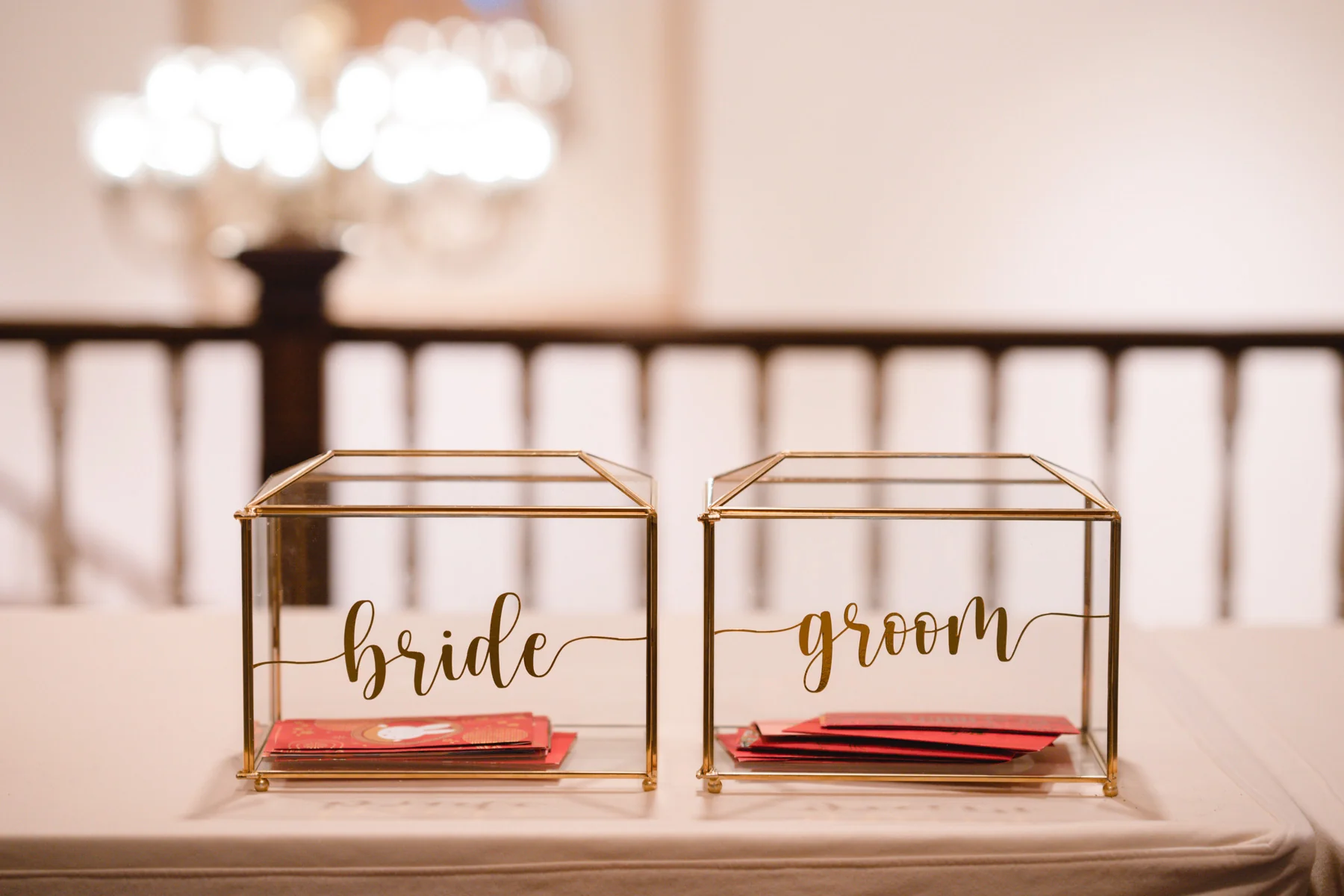
It’s one of those small but surprisingly stressful moments. You’ve dressed up, you’ve arrived at the venue, you’re about to walk toward the reception table — and then it hits you.
You forgot the ang bao.
For something that feels so routine in Singapore, the absence of it can suddenly feel very noticeable. Weddings here come with a set of unspoken expectations, and ang bao sits right at the centre of it. It’s not just a gesture. It’s part of the social fabric of attending a wedding.
Still, forgetting happens. People rush from work, misplace envelopes, assume someone else brought it, or simply have too many things on their mind. The question isn’t whether it’s ideal. It’s what to do next, and more importantly, whether you’ve broken some kind of unwritten rule.
The short answer is no. You haven’t ruined anything. But there are better ways to handle it than pretending nothing happened.
First, Take a Step Back
Before reacting, it helps to understand what ang bao actually represents in a Singapore wedding context.
Yes, there’s a practical side. Guests often estimate their ang bao based on the cost of the banquet, and there’s a shared understanding that contributions help offset expenses. That’s where all the talk about “covering your seat” comes from.
But there’s also a social layer. Ang bao is a gesture of participation. It signals that you’re part of the celebration, that you recognise the occasion and are showing up fully for it.
Forgetting it doesn’t erase your presence. You’re still there. You still made the effort to attend. And in most cases, that matters more than people assume in the moment.
Is It Considered Rude?
This is the question most people worry about.
In Singapore, not giving ang bao at a wedding can be seen as unusual, especially if it’s intentional. But forgetting it is different. It’s understood as a mistake, not a statement.
Hosts are rarely tracking who gave what in real time. The ang bao box collects envelopes without immediate scrutiny, and most couples only review them after the wedding. By then, individual moments at the reception table are long forgotten.
So no, it’s not considered rude in the sense of being offensive. It’s simply something you’ll want to follow up on.
What You Should Do Immediately
When you realise you’ve forgotten the ang bao, the instinct might be to panic or draw attention to it. There’s no need for that.
The simplest approach is often the best. Proceed as you normally would. Greet the couple, sign the guest book if there is one, and take part in the celebration.
There’s no requirement to announce that you forgot. Doing so can actually make the situation more awkward than it needs to be.
Most experienced guests handle it quietly. They attend the wedding as usual, then make arrangements afterward.
Option 1: Send the Ang Bao After the Wedding
This is the most common and widely accepted solution.
If you forgot to bring your ang bao, you can simply send it after the wedding. Many people do this, not just because they forgot, but sometimes because they were unable to attend or wanted to transfer the amount digitally.
Timing matters a little here. Sending it within a few days of the wedding feels natural. It shows that you didn’t forget the gesture entirely, just the logistics of bringing it on the day.
You can either:
- Transfer the amount via PayNow or bank transfer
- Pass a physical ang bao to the couple when you see them next
- Send it through a mutual friend if that feels easier
A short message usually accompanies it. Something simple like, “I realised I forgot to pass you the ang bao that day, congratulations again,” is more than enough.
There’s no need to over-explain.
Option 2: Transfer Digitally on the Same Day
In today’s context, this is becoming more common.
If you realise early enough, you can transfer the ang bao amount digitally during the event or shortly after. Many couples now include PayNow details in their invitations, or guests can easily ask for them.
This option works especially well if you prefer to settle things quickly. It avoids the need for follow-up later and keeps the gesture aligned with the timing of the wedding.
Still, not everyone chooses this approach. Some feel that sending it afterward feels more considered, especially if they want to include a message.
Option 3: Give It When You See Them Next
If you’re close to the couple, there’s another option that feels quite natural.
You can simply give the ang bao the next time you meet them.
This works well in situations where you know you’ll see them soon, perhaps at a post-wedding gathering, a casual meetup, or even at work if they’re colleagues.
In these cases, the delay doesn’t feel unusual. It becomes part of a normal social interaction rather than a formal correction.
Should You Apologise?
This is where tone matters more than content.
A brief acknowledgment is appropriate, but it doesn’t need to be dramatic. You don’t need to frame it as a major mistake or apologise excessively.
Something along the lines of, “I completely forgot to bring it that day, sorry about that,” is sufficient. It shows awareness without turning it into a bigger issue.
Most couples will respond casually. They understand that these things happen.
What If You Don’t Send It at All?
This is where things shift slightly.
Forgetting to bring ang bao is one thing. Not following up at all is another.
In Singapore’s wedding culture, ang bao is still expected from guests who attend. If it’s not given at all, it may be noticed later, especially if the couple is reviewing contributions.
This doesn’t mean relationships will be damaged over a single instance, but it can leave a small impression. Not a dramatic one, but enough to feel slightly out of place.
That’s why following up matters. It closes the loop and keeps things aligned with expectations.
Does It Depend on Your Relationship?
Very much so.
If you’re a close friend or family member, the absence of ang bao is less likely to be interpreted negatively. The relationship carries more weight than the gesture itself.
For colleagues or acquaintances, the expectation can feel a bit more defined. In these cases, following up becomes more important.
Still, even here, context matters. People understand that mistakes happen. The way you handle it afterward is what shapes the impression.
What About Plus-Ones?
If you attended as someone’s plus-one and the ang bao was handled by your partner, then forgetting isn’t really an issue.
But if you were expected to contribute jointly and neither of you brought it, the same follow-up approach applies. A shared ang bao can be sent afterward without complication.
This is another reminder that ang bao is often treated as a collective gesture rather than an individual one.
Why This Feels More Stressful Than It Is
Part of the anxiety comes from how structured ang bao culture can feel in Singapore.
There are guides, tables, venue-based rates, and endless discussions about what’s appropriate. Over time, this creates the impression that everything must be done perfectly.
In reality, social situations are far more forgiving.
People remember who attended, who celebrated with them, who took the time to show up. The ang bao matters, but it doesn’t define the entire experience.
Forgetting it feels significant in the moment because it disrupts a familiar routine. But it’s easily resolved.
A Simple Way to Handle It
If you find yourself in this situation, keep it straightforward.
Attend the wedding as planned. Don’t draw attention to the mistake. Send the ang bao afterward, either digitally or in person. Include a short, casual message.
Then move on.
There’s no need to dwell on it or replay the moment in your head.
Final Thoughts
Forgetting to bring ang bao to a wedding in Singapore feels like a bigger issue than it actually is. It’s a moment of inconvenience, not a breach of etiquette that can’t be fixed.
The key lies in what you do next.
Following up, in a simple and timely way, restores the gesture. It shows that you recognise its importance, even if the timing wasn’t ideal.
Leave a Reply